 BrightReachDigi
Local discovery / 4 MIN READ
Write local pages that earn their place
Decide when a local landing page is useful, what location-specific information belongs on it and how to avoid repetitive city-name pages with little value.
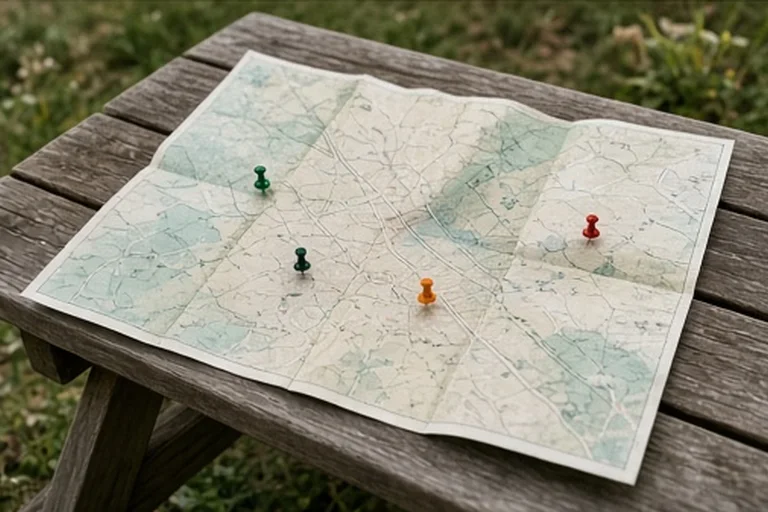
A place name is not a content strategy
Create a location page when it helps a customer understand a real location or a genuine service area. Replacing one city name with another in the same paragraph does not establish local usefulness. A strong page answers practical questions: can the business serve this area, how does that work, what limits apply and where should the visitor go next? If you cannot answer those questions distinctly, a clear regional page may be more helpful than many thin pages.
Decide whether the page should exist
List the evidence you have for serving the area. An actual branch might have its own hours, access details and on-site services. A mobile service might have travel boundaries, scheduling considerations and a defined process. Do not imply an office in a city just because you would accept an inquiry from there.
Ask whether the information changes the customer's decision. If the answer is identical across nearby towns, explain the shared service area on one page. Search demand can help prioritize work, but it is not permission to publish misleading geography.
Lead with the service and its boundaries
Use plain language to state what is offered and where. Explain relevant exclusions before the inquiry step, especially if travel, product availability or appointment arrangements differ. Avoid vague phrases such as “serving everywhere” when operations have limits. Accuracy protects the visitor from wasting time and gives the business a more useful inquiry.
For a hypothetical mobile repair business, a page could explain the types of visits available within its established service area. It should not claim a local workshop unless that workshop exists. Label any teaching example so it cannot be mistaken for your own operating details.
Add details customers can use
Useful material may include genuine pickup arrangements, access notes, region-specific delivery conditions or a simple description of how remote work is handled. Use only information you can verify. A neighborhood history paragraph usually contributes less than a clear answer about availability or process.
If publishing location photographs, make sure they are accurately described and you have permission to use them. Generated illustrations must not be presented as photographs of the business, its staff or its offices. A diagram can explain a process without pretending to document a real premises.
Connect the page to the wider site
Link to the relevant service information and a suitable contact destination. Keep the page reachable from a sensible service-area or location hub rather than creating a hidden collection of disconnected pages. Navigation should help a visitor move from a broad overview to the detail they need.
Give each page a descriptive title and a main heading that match its true purpose. Structured data should reflect verified facts, not fill gaps with invented address or rating fields. Do not add a location to a business schema simply because the page mentions that city.
Review maintenance before scaling
A large location library creates an obligation to maintain each page. Record which details are unique, who can verify them and when they were checked. When operations change, update both the hub and affected pages. Remove unsupported promises rather than leaving stale copy online because the page once attracted visits.
Measure whether visitors find the information useful through relevant actions and qualitative feedback. A page with many visits but frequent unsuitable inquiries may need clearer boundaries. Do not assume low volume means failure if the page serves a small, specific audience well.
A practical exercise
Pick one proposed city page and underline every sentence that is genuinely specific to how the business serves that area. If almost nothing remains, reconsider whether a separate page is warranted. Draft a shorter regional explanation instead and compare the two from a customer perspective. The better option is the one that answers real questions with verified details. Do not keep a page merely because its URL already contains a desirable place name or a writer has spent time on it.
Local page questions
How many city pages should a business have? There is no universal number. Use the number required to explain real, distinct customer needs.
Can a service-area business write local content? Yes, provided the page describes actual coverage honestly and does not imply nonexistent locations.
What is a useful first draft? A service description, verified coverage, practical conditions and a clear next step are a stronger start than a long generic introduction about the city.
Reference & perspective
For primary documentation relevant to this topic: Google Business Profile representation guidelines. Platform settings and requirements may change. Examples are illustrative, and guidance is general rather than individual advice.
Suggest a correctionKEEP THE IDEAS CONNECTED
A sensible next read.

A content brief a writer can actually use
Create a focused content brief with an audience task, evidence plan, working outline and clear boundaries so a writer can produce a useful first draft.
Read the guide : A content brief a writer can actually use
Plan a welcome sequence without the noise
Plan a modest welcome email sequence around the signup promise, one useful action at a time, clear expectations and a reliable way to unsubscribe.
Read the guide : Plan a welcome sequence without the noise
Plan one focused paid search campaign
Map a first paid search campaign from a clear objective to search themes, landing-page fit, measurement checks and a bounded learning budget before launch.
Read the guide : Plan one focused paid search campaign